Categories
Uncategorized

High protein diet and Longetivity- mTOR pathway

Protein builds muscle, boosts recovery, and supports metabolism — but what if the same biological pathway that drives strength could also accelerate aging when overstimulated?

Welcome to the world of mTOR, the metabolic “growth switch” that determines whether your body is in build mode or repair mode. Understanding how protein interacts with this pathway is the key to balancing vitality, metabolic health, and longevity.

What Is the mTOR Pathway? Your Body’s Master Growth Regulator

The mTOR (mechanistic Target of Rapamycin) pathway is one of the most important nutrient-sensing systems in human physiology. Think of mTOR as your body’s chief decision-maker:

When mTOR Is Activated (Growth Mode)

Your body prioritizes:

  • Muscle protein synthesis
  • Tissue repair
  • Metabolic activation
  • Cellular growth

When mTOR Is Suppressed (Repair Mode)

Your body shifts into:

  • Autophagy — removing damaged cells
  • Reduced inflammation
  • Improved insulin sensitivity
  • Longevity pathways

In simple terms:

mTOR ON = Build
mTOR OFF = Clean

Both states are essential — but only when they are balanced.

How Protein Influences the mTOR Pathway

Of all nutrients, amino acids — especially leucine — are the strongest activators of mTOR.

When you eat a protein-rich meal like eggs, fish, meat, whey, or even lentils:

  • mTOR switches ON
  • The body enters a growth and repair phase
  • Muscle recovery and strength building happen efficiently

This is beneficial, especially for:

  • Athletes
  • The elderly
  • Those recovering from illness or injury
  • Anyone with muscle loss or metabolic slowdowns

For these groups, mTOR activation through protein is therapeutic.

The Double-Edged Sword: When mTOR Stays Switched On

Modern lifestyle patterns often overstimulate mTOR without giving the body enough time to repair.
Common triggers include:

  • Chronically high-protein diets
  • Very frequent snacking (even on healthy foods)
  • Excess intake of leucine-rich foods
  • Sedentary lifestyle with little cellular demand
  • Constant calorie surplus

This leads to chronic mTOR activation, which suppresses autophagy — the body’s essential self-cleaning system.

Over time, this imbalance can contribute to:

  • Insulin resistance
  • Oxidative stress & chronic inflammation
  • Accelerated cellular aging
  • Fatty liver and metabolic inflexibility

So remember:
mTOR is not “good” or “bad.”
It’s a switch, and health depends on using both modes wisely.

How to Balance mTOR for Strength + Longevity

The key is cycling between growth and repair — not avoiding protein.

✔ When to Activate mTOR (Growth Mode)

Do this for muscle health, metabolism, and recovery:

  • Eat protein-rich meals (20–30 g protein per meal)
  • Include leucine-rich foods like eggs, whey, and legumes
  • Do strength training and HIIT
  • Support recovery during illness or stress

When to Suppress mTOR (Repair Mode)

Do this to stimulate longevity pathways:

  • Intermittent fasting or extending overnight fasting
  • Plant-based meals rich in polyphenols
  • Anti-inflammatory herbs like green tea, curcumin, resveratrol
  • Prioritize deep sleep, when autophagy naturally increases
  • Light movement and breathing exercises
  • Reduce grazing and constant snacking

This rhythm enables metabolic flexibility — the ability to shift easily between growth and repair.

Practical Daily Rhythm for mTOR Balance

Morning:
✔ Hydration + polyphenol drink (green tea / turmeric water)
✔ Light movement (walking, yoga)

Midday:
✔ Protein-rich meal + strength training session
✔ mTOR activation for muscle growth

Evening:
✔ Plant-based dinner with antioxidants
✔ Earlier cutoff for meals → supports autophagy

Night:
✔ Deep restorative sleep → mTOR off, autophagy on

This pattern allows you to enjoy the benefits of protein without sacrificing longevity.

The Takeaway

Healthy longevity is not about low protein or extreme fasting.
It’s about smart cycling between growth and repair.

The mTOR pathway teaches us a powerful truth:

“Health isn’t built through more — it’s built through balance.”
Balancing protein intake, movement, and fasting gives your body the flexibility it needs to stay strong, lean, and youthful — at any age.

References
Saxton, R. A., & Sabatini, D. M. (2017). mTOR signaling in growth, metabolism, and disease. Cell, 168(6), 960–976.
Melnik, B. C. (2012). Leucine signaling in the pathogenesis of type 2 diabetes. World Journal of Diabetes, 3(3), 38–53.
Johnson, S. C., Rabinovitch, P. S., & Kaeberlein, M. (2013). mTOR as a therapeutic target for aging and age-related diseases. Nature, 493(7432), 338–345.
Kim, J., & Guan, K. L. (2015). mTOR as a central hub of nutrient signalling and cellular growth. Nature Cell Biology, 17(5), 533–542.
Levine, B., & Kroemer, G. (2008). Autophagy in the pathogenesis of disease. Cell, 132(1), 27–42.
Longo, V. D., & Panda, S. (2016). Fasting, circadian rhythms, and time-restricted feeding. Cell Metabolism, 23(6), 1048–1059.

Categories
Uncategorized Women's Health

Burning fat with Carnitine

Some days ago my good friend invited me over for a weekend lunch. As we sat down to dig into the appetizing lunch I saw that her plate was strictly fat-free. She confessed that even with a dedicated gym routine her Lipid profile was still high and the belly pooch unrelenting.

Carnitine is a naturally occurring compound that binds to the fatty acid molecules in the blood and flips them over into the cell engine aka mitochondria as a fuel. optimal carnitine levels, optimal fat burning, better waist-hip ratio, and better energy levels.

The good news is that it is available in a lot of foods like

Red meat

Fish like mercury-free salmon and cod.

Tempeh

Diary

Avocado and asparagus

Dietary supplementation as L- Carnitine depends on one’s age, health, and training levels.

Epigenetics has always fascinated me because we can positively impact our genes with the right lifestyle choices. Here are some of them

Reduce stress by doing 10-15 Belly breathing rounds 3 times per day.

Improve sleep with a consistent bedtime routine, no blue light, and optimal temperature.

Engage in moderate or vigorous exercise with at least 24 for moderate and 48 hours of rest for vigorous.

Last but not least good hydration with light hay coloured urine always.

The environment inside us mimics the environment outside us

Categories
Uncategorized

The movement casts


An otherwise lazy Sunday afternoon turned into an eye-opener thanks to our visit to a soft play center. The vibrance of the place made me join my children. There were climbing, hanging, crouching, and sliding activities. A child’s play soon turned out to be the most challenging play for the mom. I have always been proud of my ability to do structured fitness work but 30 min into these movements I was completely exhausted much to my surprise.
A deeper thought made me realise how much I had cast myself into repetitive movements denying myself the movement variety. It had slowly made the movement maps in my brain fuzzy with disuse. That’s why I found the natural movements so unnatural. We are designed to move and move task-oriented. That’s what would engage our brains after a few times we function on autopilot. Thus we compromise innate fitness for aesthetic fitness.
So how to move naturally in the urban world? I am listing a few things which have helped me and hoping to add to this
1. Move with a purpose.. a walk to get groceries or walk the dog.
2. Ditch the tracking apps. Those numbers don’t mean anything to our brains.
3. Slowly transition to floor sitting
4. Try to wear your pants with minimal support.
5. Stack your pots and pans on the lowest rack. You will be able to add more squats to your day.
6. Use a squatty potty
7. Play on the floor with your children.
8. Accept that any change would be difficult in the beginning so be kind to yourself.
HAPPY UN CASTING 

Categories
Pain Management

Vitamin C “Community”

My dad was a government servant and we moved quite a bit during my childhood. We cousins always had a blast during the summer holidays. A few days ago my youngest cousin announced his marriage. As expected all of us got into a flurry of activities. After one such long call, I couldn’t help feeling relaxed, at ease, at peace. I love the role of Epigenetics in being pain-free and healthy.

Oxytocin is a neurotransmitter and hormone. It is lovingly called the Cuddle or love hormone. It strengthens empathy and reduces stress and anxiety. This improves clinical outcomes in treating pain and being pain-free. In this world of virtual vs. real interactions here are a few things that help

Listening to music with loved ones

Petting animals

Aromatherapy especially lavender and vanilla

Sharing a good laugh

Physical relaxation techniques like deep breathing, aerobic or group exercise.

Genes play 4% role in any disease 96% is what we tell the genes to do and how we live.

Categories
Uncategorized

Weight loss: a fine blend of willpower and hormones

An otherwise routine Saturday afternoon turned out quite insightful thanks to my dear friend. We had decided to catch up over coffee. Delicious coffee and delightful company filled me with joy. An otherwise cheerful person she seemed quite worried. She was a fitness freak and super motivated and yet she complained that her energy levels were dipping and waistline increasing. Thinking that these were typical perimenopause symptoms she was dieting and gymming harder to no avail. Seeing her the clinician in me got curious. I ran a blood work. HbA1c was more than 6, Fasting insulin more than 8, LDL and triglycerides elevated, and a waist-hip ratio was more than 1. She was clearly Pre diabetic Aka insulin insulin-resistant.

It is a metabolic condition where the cells downregulate insulin receptors. so there is more insulin in the blood and less in the cells. This signals the brain to store fat in case of starvation. Fat is tucked away and stored in the cells. This fat is not available as a fuel even in high-intensity workouts. So we burn the carbs causing energy slumps and unrelenting waistline. Time for actionable

Focus on form and CAR( Controlled Articular Rotations)

Stroll for 20 -30 min after each meal

Keep the majority of exercises in a Moderate, aerobic zone.

Support liver and pancreatic health with cruciferous veggies, sleep, low glycemic and fiber-rich foods.

Balance cortisol with 2-3 rounds of belly breathing every hour.

Coming back to my friend she has lost a couple of inches and is her old cheerful self again

A healthy gut leads to healthy hormones and a healthy weight.

Categories
Uncategorized

Ferrari ki Sawari

It was a regular Wednesday afternoon till my regular auto driver stood me out and I had to pick my kids up. Standing on the street corner, my eye caught sight of an auto with heavy Ferrari stickering. The driver a chirpy young lad in his early 20’s got talking about his love for fast cars and why his auto had become his Ferrari. I laughed it off little did I know that he had meant it literally. 

A middle-aged person with no appetite for speed I felt my heart flutter every time we negotiated a bend. After the initial shock, the movement nerd in me took over and wanted to note my physical response.

This is what I found

Anticipatory core bracing

As we neared any vehicle I would involuntarily tuck my abdomen in, lift my diaphragm up, and push all the air out of my lungs. Lift my chest, shoulders, and neck up. This reduced the blood supply to my brain making me feel more nervous and lightheaded. My ramrod rigid back was amplifying the sensation of the shock making me feel like a brick being thrown around. A few rounds of this and I had had enough and now it was time for the correctives.

When under stress, free up the belly. Allow the breath to flow in and out-of the belly, this will loosen your back and allow efficient shock absorption.

when under stress, free up the breath to free up the brain

As my journey came to an end I learnt that we may not be able to change the circumstances of our lives but can surely choose our response which will change the effect the circumstance has on us.

Categories
Uncategorized

Weight Loss with Hormone Reset

Introduction

Hormone reset is a method of weight loss that focuses on the hormones that regulate our metabolism, hunger and cravings.
In this article, we’ll be looking at how hormone reset can help you lose weight in three different ways:

  • Boosting your metabolism by reducing insulin resistance and increasing thyroid function (the “engine” of your body)
  • Reducing hunger and cravings with leptin resistance reduction (the “brakes” on your appetite)
  • Balancing the sex hormones estrogen, progesterone, and testosterone

Technique 1: Eating Habits

The first technique is to optimize your macronutrient intake. This means eating more protein and healthy fats while reducing sugar and processed foods.

  • Eat more protein: Protein helps you feel full for longer, so you’ll be less likely to overeat later in the day. It also helps build muscle mass, which can help you burn calories even when you’re not exercising!
  • Eat healthy fats: Healthy fats are an important part of any balanced diet–they help keep your hormones balanced too! You should aim for a minimum of 25 grams per day (about 2 tablespoons). Some good sources include avocado, olive oil (make sure it’s extra virgin), nuts/seeds like cashews or almonds (try them with some dark chocolate!), and coconut milk/creamer instead of dairy milk if possible…

Technique 2: Exercise

The second technique to weight loss is exercise. Exercise can be a great way to lose weight, but it’s important to focus on strength training and incorporate HIIT (high-intensity interval training) and cardio into your routine.
When it comes to strength training, focus on compound lifts like squats, deadlifts, bench presses, and rows. These exercises use more than one muscle group at once so they’re more efficient at burning calories than isolation exercises like bicep curls or triceps kickbacks. Additionally, these movements require more energy from your body which means that you’ll burn more calories during the workout itself as well as after it’s done!
HIIT workouts are another great way of burning fat because they’re short bursts of high intensity followed by periods of rest–so even though they only last 15 minutes or so per session (compared with 45+ minutes for traditional cardio), they still provide an excellent calorie burn!

Technique 3: Stress Management

Stress is a major factor in weight gain, and it can be hard to manage. If you’re feeling stressed out, try these techniques:

  • Reduce your stress levels as much as possible. This may mean getting more sleep or practicing mindfulness and meditation.
  • Get adequate sleep every night so that your body has time to recover from the day’s stresses before going to bed (and not eating late at night).

Conclusion

  • A hormone reset is a great way to lose weight.
  • It’s an easy way to get started on your journey to a healthier lifestyle.
  • You can do it at home, with minimal equipment and no special training required!
Categories
Uncategorized

Optimizing blood glucose with exercise

Hi in this blog ,I will talk about blood sugar management from a movement science and a functional medicine perspective. Before we dive into the action items let’s briefly see what is the root cause for the glucose levels to vary

 The Spectrum of blood glucose dysregulation

Wake up When we are about to wake up the liver is signaled to release more blood glucose to give us energy to start the day  Post MealSpike in the levels of blood glucose and insulin to move the glucose inside the cells to provide energyStressIt has the same effects as a meal. There is a spike in both glucose and insulin levels. The brain is tricked into believing that you have had a meal. 

In diabetic patients as there is low insulin secretion the early morning glucose levels rise up causing hyperglycemia .. This lasts from 3 am to 8 am and is called the Dawn effect. This spike in blood sugar can wake you up from sleep

Similarly if you have had a very low carb dinner or have skipped it then the sugar levels drop till 2 am and then hormones are released to stop insulin secretion and this will cause rebound hyperglycemia.. aka Somyogi effect

As you can see that our blood sugar levels are not static but quite responsive to what we do, what we eat, and how we feel and when we have too many fluctuations for too long it becomes a blood glucose dysregulation which is seen as increased

Hba1c

Fasting glucose

Estimated average glucose

Fasting insulin

Lets talk about insulin resistance

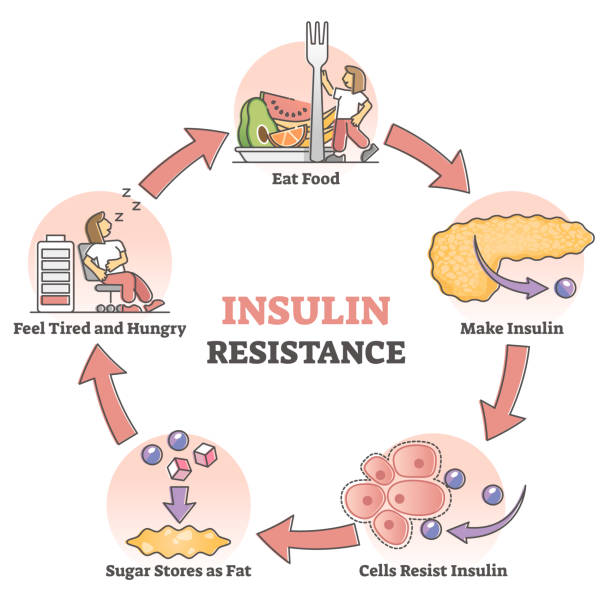
Image source shutter stock

 A great image to show what happens in insulin resistance…As you can see the glucose from the food is not able to get into the cells as they don’t respond to the insulin secreted. So cells cant utilize glucose our biggest energy source

In my pain and functional medicine practice I have listed a few most common complaints reported

Low energy levels mainly in the morning even after sleeping for 7 to 9 hours

Sleep disturbances 

Delayed recovery from a workout session of moderate intensity. Persistent soreness or low energy even  2 -3 days post-session.

Unable to lose belly fat even with dedicated workouts

Difficulty in building muscle

More exercise injuries which relapse or have delayed healing. I had a patient who had a groin injury that had never really healed even after 3 years and had taken multiple manual therapies and fascial work in physiotherapy before coming to me. When I did a metabolic work-up on him he had an elevated hba1c of 6.3 and fasting insulin. He reported 3 out of 5 above-mentioned symptoms and was confused as to why he was unable to break the injury cycle and tame his expanding waistline even with dedicated hours in the gym. Chronic pain management is all about getting to the root cause of the problem.

After his blood glucose was stabilized not only did his energy levels improve so did his injury susceptibility. 

Why are these happening?

This is science simplified …

Cells are starved of glucose
Can’t produce enough energy due to the body and poor mitochondrial function
CELLS GET TIRED and We feel tired even after a meal
POOR MUSCULAR CONTROL  AND  EFFICIENCY DURING EXERCISE aka  Poor exercise form and poor recovery
MORE EXERCISE CAUSED MICROTRAUMA 
After exercise injuries and soreness increases and this makes more injuries.

Why does my belly fat not reduce?

Increase blood glucose
High insulin production
Cells have become insulin resistant because of constantly high blood insulin
High insulin levels in the blood
Prevents breakdown of fats aka LIPOLYSIS
Increases fat accumulation in the body around the organs  ie the abdomen 
BELLY FAT

If any of the above resonates with you read on for some of the strategies which I use regularly

Food

The food you eat talks to your gut microbiome and decides your health.

Eat whole, natively sourced and a variety of grains.

Go gluten free

Do not skip dinner.

Add more veggies to your diet. A simple ratio of 2:1:1 with 2 of veggies and 1 of grain and 1of protein is great.

Relax , do a few belly breaths and eat slowly and mindfully

Rhythm

Our body has an internal clock and a cicardian rhythm. Our hormones are released as per this clock. So sleep and wake at roughly the same time everyday. Again keep your meal times consistent 

Movements

 Image credit Cleveland center of medicine

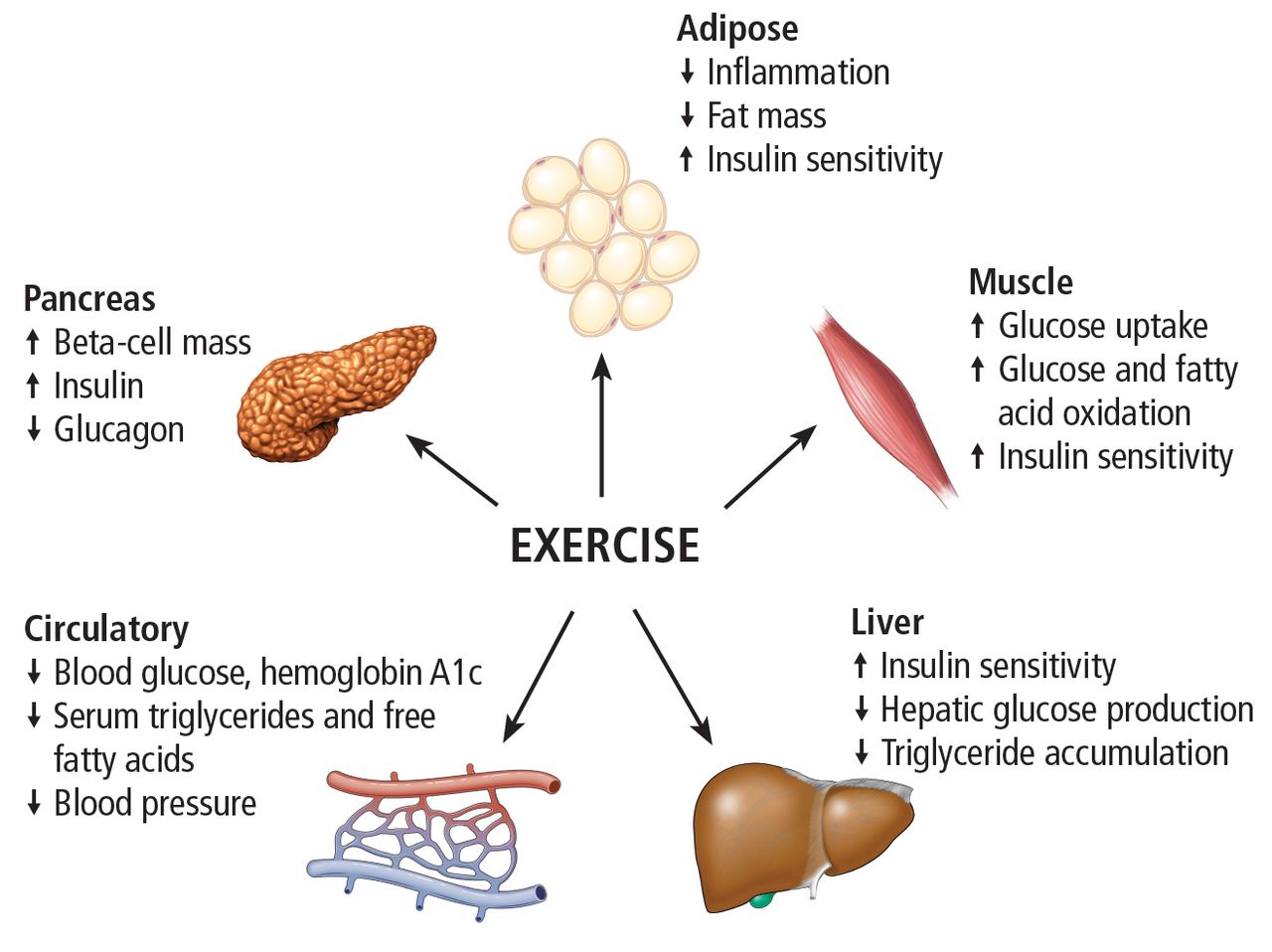
A great picture to show why should you exercise and move more 

Do atleast 2 to 3 sessions of strength training per week.

Make sure to recruit more muscles during exercises.

Recruit large groups more like core and gluts.

Focus more on the form and not the number.

Keep your breathing synchronized with the movements.

If you are doing weights follow a scientific protocol like SAID or OXFORD.

Look out for signs of overtraining.

I hope you enjoyed reading this as much as I enjoyed putting it down…. Take care

Additional reading

https://www.webmd.com/diabetes/dawn-phenomenon-or-somogyi-effect

https://www.ncbi.nlm.nih.gov/pmc/articles/PMC4919480/#__sec12title

https://pubmed.ncbi.nlm.nih.gov/8621015/#:~:text=Abdominal%20fat%20had%20a%20significantly,oxidation%2C%20and%20hepatic%20glucose%20output.

https://scholar.google.co.in/scholar?q=exercise+and+insulin+sensitivity&hl=en&as_sdt=0&as_vis=1&oi=scholart#d=gs_qabs&u=%23p%3Dw4vBtXKoDLwJ

Categories
Uncategorized

GUT HEALTH AND CHRONIC PAIN

All of us know that pain is an unpleasant sensation and can happen with or even without tissue damage. In this blog let us look at how our gut health or lack of it will determine how much and how long the pain remains with us and what to do about it.

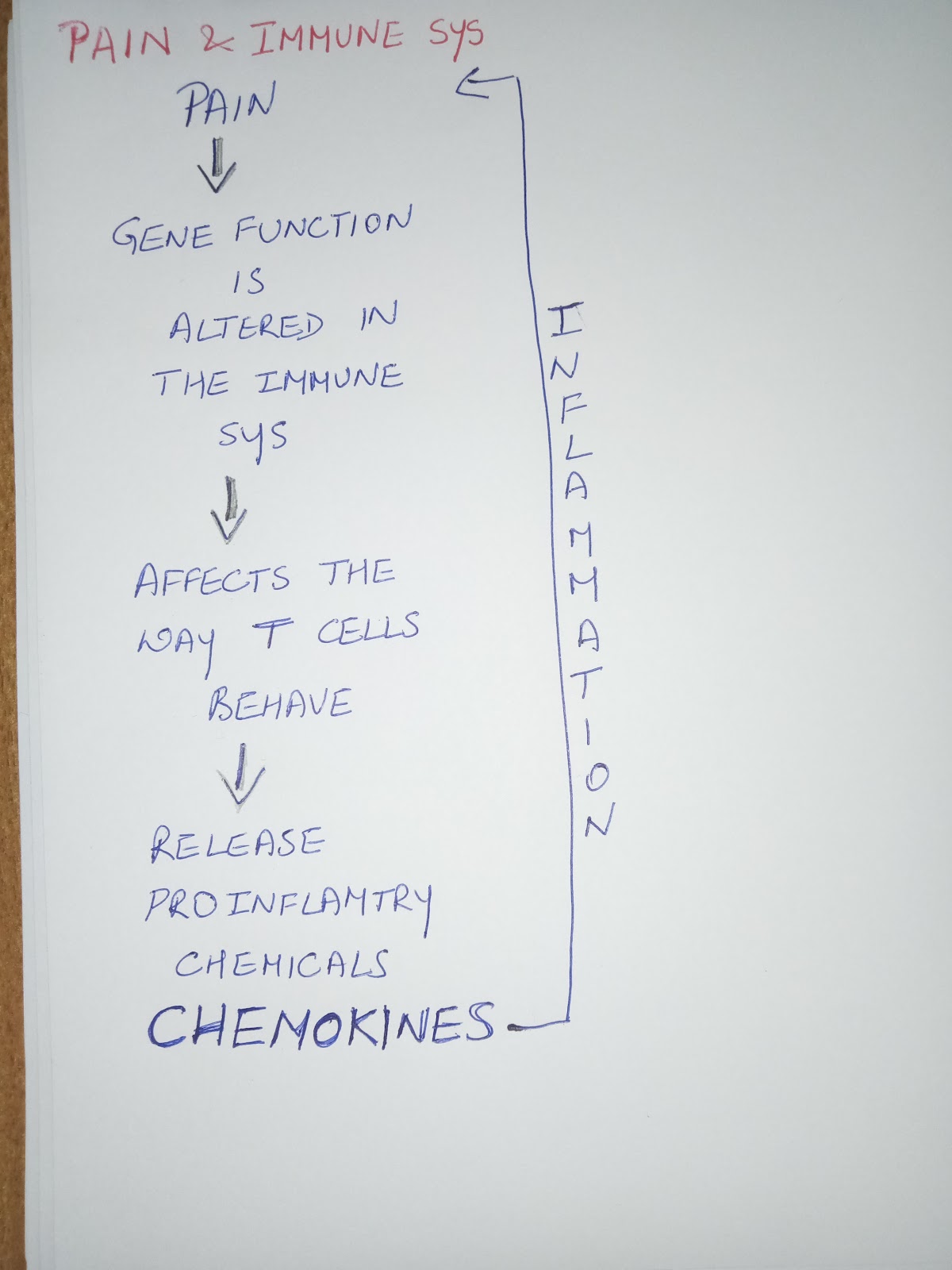
Pain simply put is an immune response to an antigen ( injury, threat of injury). This leads to activation of our immune system just like forces are primed before a war our immune system is in a state of alert.

When the pain is chronic ( more than 3 months), it can alter the gene function of the immune system. This will affect how the T cells, a group that is very important to regulate immune functions, respond. This in turn will release Proinflammatory cells aka Cytokines. This will keep the inflammation and the pain drive alive and thus you are stuck with pain that either comes back every now and then or remains with you even after the tissue damage is over.

GUT-BRAIN AXIS

It is the communication between the nerve cells in the gut and the microbiota with the brain and the spinal cord. If the gut microbiome is diverse and healthy it gives accurate signals to the brain to turn down the pain stimulus and that’s the ideal situation.

When for any reason the gut health is poor ( medications, stress, leaky gut, nutrient-deficient foods)  the microbes release chemicals which sensitize the nervous system, increase the cortisol ( stress hormone) levels in the blood, and put us in a state of alarm. This can increase the pain and prevent full recovery.

In short, a happy gut makes a happy brain and a pain-free life.

TIPS FOR A HEALTHY GUT

Eat native and diverse foods.

Hydrate well

Manage stress

Sleep hygiene

Move and move more of you.

ADDITIONAL READING

Immune responses of microglia in pain

https://www.sciencedirect.com/science/article/abs/pii/S0014488611004730

Immune activation – role of pro inflammatory cytokines

https://www.sciencedirect.com/science/article/abs/pii/0304395995001867

Pian regulation by gut microbiota

https://www.sciencedirect.com/science/article/pii/S0007091219306385

Gut-brain axis

https://journals.physiology.org/doi/full/10.1152/physrev.00018.2018?rfr_dat=cr_pub

https://en.wikipedia.org/wiki/Gut%E2%80%93brain_axis

Categories
Uncategorized

How to climb stairs with knee pain

Hi, this blog is for those of you who have knee pain and have stairs in your house which you have to negotiate on a daily basis. Here I am going to share a few tips which would help you to do this activity pain-free and safe.

Before we move on to the actionable let us look at what happens when we climb up

If the step is high we bend the hip and knee to 90 degrees and if low less than that.

With patellofemoral pain aka front of knee pain

The front of the thigh muscles or Quadriceps lengthen eccentrically and the back of the thigh muscles aka Hamstrings shorten. The calf muscles shorten to help bend the knee and place the foot on the step. All of these try to push the knee cap out of the groove in which it sits aka Patellar groove. To prevent this displacement the ligaments tighten and put pressure on the knee cap and the cartilage behind it causing pain and burning.

With medial osteoarthritis

In a normal joint both the lower bulb like ends of the thigh bone femur or medically known as femoral condyles glide and roll forward smoothly on table  top of the tibia or the shin bone. This bends the knee painlessly. In case of any degeneration or tear the gliding is uneven and painful. When such a knee is loaded more while climbing up it increases the pain.

Climbing down

Front of knee pain

The quads or the front of the thigh muscles shorten actively to straighten the knee to allow the foot to be placed on the step-down. The hamstrings and the calf lengthen. Both these force the knee cap into the groove loading the patella and its joint more. This makes climbing down more painful for those of us who have this kind of pain.

Inner knee pain

As the gliding is not smooth and there is instability there is pain with loading but much lesser than climbing up.

By now you have a brief understanding of what happens and why does it pain lets get to how to do it painfree

1.Always hinge or bend from the hips

Most of us unknowingly curl the spine and flatten the low back while climbing. Be mindful to bend the hips and keep the chest relaxed and down. Keep the weight on the heels.

2. Tighten the buttock muscles or the gluts

To engage the core and the gluts breathe out and gently pull the navel to the spine without rounding the back. Try to tighten the buttock on the side which is lower. Again there should not be any turning of your chest. As you alternate steps you will alternate the contractions

I hope these tips help you to climb pain-free.